Saturday, February 18, 2023

NJ Forest Task Force to publish final report to Legislature

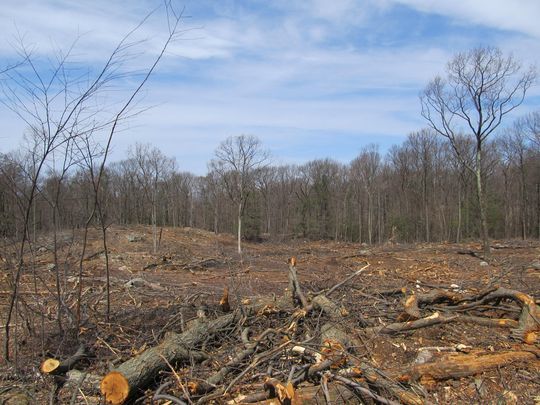
Logging at Sparta Mountain WMA
Credit: New Jersey Forest Watch

The NJ Forest Task Force commissioned by Senator Bob Smith (Chair of the Senate Environment and Energy Committee) is about to produce its final report and present to a joint legislative session on Feb. 22, 2023.  Members of the legislature as well as the public and press need to understand how the task force arrived at its recommendations and the science behind them in order to evaluate them.

In forming the task force Senator Smith stated:  “Forests are critical to the environmental welfare of our State. They can play a major role in mitigating climate change by sequestering carbon dioxide; providing habitats for endangered wildlife; helping clean and protect drinking water sources; and stabilizing soils. Proper management of forests is also necessary for preventing wildfires which are becoming more frequent and intense.”[1]

The purpose of the task force was “to study and identify ways in which the State can best manage its [public] forests in order to fight climate change, prevent forest fires, improve ecosystems, and protect soil and water quality.”[2]

A major impetus for creating the task force appeared to be the ongoing mechanized, commercial style logging (clearcutting) on Sparta Mountain of 10+ acres per year since 2011, conducted by the NJDEP in partnership with the NJ Audubon Society.  To date, approximately 110 acres have been essentially clearcut on Sparta Mountain.

Among the many issues uncovered by the task force is the fact that there are no state policies codified by statute for management of NJ public forests adopted pursuant to the Administrative Procedure Act.  There are also no formal DEP rules and regulations for this purpose.  The NJDEP along with partners like NJAS are making public policy with no authorization, very little public input and virtually no oversight.

The task force leaders set two key objectives:  1) develop a process to reach consensus where it was possible and 2) base all recommendations on peer-reviewed science.  Consensus was defined as having about 95% of participants in agreement on a topic.  Only policies with consensus support were to become recommendations.  Proposals backed by peer-reviewed science findings were solicited from participants.  After several meetings it was clear that it was going to be very difficult to achieve consensus on almost any topic and the team leaders stated that the science was too deep and complex and the task force did not have the resources to properly evaluate it.  Participants created over 75 proposals but only 40 were discussed.

At that point, the leaders changed tactics and asked for a list of any topics on which we might be able to find consensus.  This started a less than totally transparent process. First, the random list was aggregated by the leaders into a monolithic all-or-nothing package of elements called the Framework.  Participants were asked to vote on accepting or rejecting it in total.  Participants were urged by the leaders to support the entire Framework even if they disagreed with portions of it.  There were several rounds of votes in November and December (and participants were then also able to vote on individual topics), but the leaders never produced a quantitative report on the support for any elements or the total package. In the last iteration of the Framework, all the previously labeled “elements,” suddenly became “Recommendations,” and now form the basis of the task force output.  As of this date, there has been no report demonstrating consensus on any elements in the Framework or the overall document itself, yet it is described by the leaders as “ideas that enjoy broad agreement among diverse Task Force participants.”

While there are a number of good recommendations in the Framework there are also bad recommendations.  Most egregious is the late inclusion in the Framework – long after task force meetings had ended and, therefore, without any discussion amongst the participants – of Recommendation 15 which states:

The NJDEP should not include commercial profit as a goal in any forest management plan* on public land. Commercial timber management should not be a goal for any forest management plan on public land. Wood products can be sold in instances where cutting and removal of wood is a necessary part of an approved plan with ecological health, climate, or other non-commercial goals.

*includes Ecological Restoration Plans, Natural Resource Stewardship Plans or other plans on public forested lands

This packages a very good recommendation (disallowing commercial logging) with a very bad recommendation (allowing the sale of wood products from approved logging plans for private gain).  This packaging made it impossible for many participants to approve of disallowing commercial logging because the recommendation includes the continuation of the status quo logging, justified through false and misleading claims, as seen on Sparta Mountain.  Moreover, the opposition to this DEP program appeared to be a major factor in creating the task force, but has been manipulated, without consensus support, to now be a recommendation.

Space does not permit a thorough explanation of the arguments used to justify the current and future logging program, the lack of data behind recommendations and omissions from the recommendations.  Briefly,

  • No substantive actions were recommended to fight climate change – the first item on Senator Smith’s list of goals
  • Recommendations were not based on any quantification of the existing or necessary increase in carbon sequestration called for in the Global Warming Response Act 2020 Report
  • It ignores many studies showing that maturing and mature forests store and sequester more carbon than young forests, which are net emitters of carbon for their first two decades
  • Recommendation 15 undercuts efforts to fight climate change by increasing carbon emissions from tree cutting and removal
  • Despite acknowledging the open question of DEP legal authority to set policy for public forests and lack of regulations, the task force specifically recommended that existing plans continue to be implemented
  • Arguments for the need to increase habitat for certain bird species through logging have been debunked[3]
  • There was no consideration of the logging harms to many interior forest bird species, other animals such as amphibians, bobcats and bears and the essential network of mycorrhizal fungi, essential for healthy forests
  • There is no science-based evidence that cutting and removing wood has any climate benefits as included as a rationale in Recommendation 15 – the reverse is true
  • There was no consideration of the harms caused by mechanized logging
  • There was no consideration of any standards for ecological restoration
  • There was no review of the scientifically proven ecological benefits of leaving cut wood on the ground to allow its carbon to be sequestered and the absence of need to remove wood for virtually any ecological purpose
  • There was no willingness to recognize the scientific basis of proforestation forest management in the Framework
  • There were no recommendations on protecting soil and water quality
  • There was no discussion of the often-stated need for a moratorium on logging, until regulations are written

In summary, the task force produced no provable consensus, has not followed the science and recommends the status quo on logging public forests for private gain.  NJ residents have not paid to preserve their forests in order to generate profit for private entities.

Silvia Solaun, Executive Director, New Jersey Forest Watch

Ken Dolsky, Vice President, New Jersey Forest Watch


[1] https://www.insidernj.com/press-release/smith-announces-formation-forest-stewardship-task-force/

[2] https://www.insidernj.com/press-release/smith-announces-formation-forest-stewardship-task-force/

[3] Kellett, M. J., Maloof, J. E., Masino, S. A., Frelich, L. E., Faison, E. K., Brosi, S. L., and Foster, D. R. (2023). Forest-clearing to create early-successional habitats: Questionable benefits, significant costs. Front. For. Glob. Change. https://doi.org/10.3389/ffgc.2022.1073677

Monday, January 23, 2023

NJ Highlands Coalition Press Release

Logging harms old growth forests - Credit: Yale University
Credit: Yale University

New Jersey’s recent investment in urban forestry and management of established public forests at cross purposes, says advocacy group

(Boonton, NJ) The New Jersey Highlands Coalition releases the following statement today in response to New Jersey Department of Environmental Protection Commissioner Shawn LaTourette’s announcement of the Murphy Administration’s awarding of $24.3 million in Natural Climate Solutions Grants.

Urban tree planting has many benefits, from flood mitigation to air filtration, cooling cityscapes in the summer, reversing blight, providing carbon capture to mitigate against greenhouse gas emissions, and improving the overall quality of life in New Jersey’s cities. We applaud Governor Murphy in making this significant and wise investment in projects to establish urban canopies in Atlantic City, Berkeley Heights, Camden, Kearny, Linden, Newark, Brick, Stafford, Princeton, Trenton and Readington, and awarding grants to implement many of these projects to organizations with histories of excellence in greening urban New Jersey, such as New Jersey Conservation Foundation, American Littoral Society, the Nature Conservancy and Partnership for the Delaware River Estuary.

But we must caution the Governor that, no matter how many trees are newly planted, or how many acres of tidal salt marshes are restored, if at the same time his Division of Fish & Wildlife continues to cut down mature forest stands in established forests, or the Green Acres Program approves Forest Stewardship Plans that clear cut acres of public forests, the Governor’s climate mitigation strategies will result in a zero-sum gain, or worse.

Today, on a regular schedule, acres of mature forests are clear-cut in New Jersey’s publicly owned forests justified and funded by the Young Forest Initiative, to access New Jersey’s remaining mature and valuable timber in the name of spurious ecological goals of habitat restoration and enhancement. And if certain interests succeed, bills currently introduced in the Legislature, if passed, would require that all public forests of 25 acres or more, purchased in whole or in part with Green Acres funds, whether state, county, municipal or non-profit-owned, would be required to implement Forest Stewardship Plans where logging is encouraged.

In early 2021 we discovered that a town in Warren County had contracted with a State-approved forester to implement a 10-year timber harvest plan of the type allowed under the pending bill. It was approved by the NJDEP and the State’s Green Acres program and was for the expressed purpose of raising revenue for the municipality by harvesting timber. If this type of harvest was to occur on all public forests of 25 acres or greater the impacts would be devastating, and the Governor’s initiative to plant urban trees as a measure to mitigate for carbon emissions would not only would be meaningless, but silly.

A recent study by the US Department of Energy has shown that it would take 151 newly planted oak trees 16 years to equal the yearly carbon capture of one 40 foot oak tree, yet today we are cutting down 80-175 year old trees on public lands.

“There is a tremendous disconnect between what the Governor wants to achieve by positioning New Jersey’s public forests to mitigate for our carbon emissions and the State’s approval criteria for managing public forests. We continue to cut down our best defense against climate change,” said Elliott Ruga, Director of Policy and Communications at the New Jersey Highlands Coalition. “No amount of urban tree planting can make up for the loss of carbon capture from our mature forests when they are cut.”

Highlands Coalition board member, Dr. Sara Webb, Director of the Drew Forest Preserve and Professor emerita of Biology and Environment at Drew University said, “Our most mature forests in the Highlands provide society so much in the way of a clean water supply, habitats for the greatest diversity of species, accessible public recreation, carbon sequestration and more. Cutting down our oldest and tallest trees is so destructive to all of these resource values. It defies common sense that we continue to manage our high conservation forests in such a manner.”

“If we want to get serious about climate adaptation in New Jersey we must allow our most mature forests to transition to old growth”, said Julia Somers, Executive Director of the New Jersey Highlands Coalition. “The harvesting of timber requires bringing heavy equipment into the forest, turning rudimentary foot paths into logging roads, which exposes forest soils to invasions by non-native species and creates habitats that nurture an already over-abundant deer population. Extracting timber prevents soil replenishment and the loss of favored habitat for many healthy forest indicator species such as fungi, insects, amphibians, birds and mammals.”

The New Jersey Highlands Coalition, which advocates for the protection of the region’s natural and cultural resources recognizes that the forests of the Highlands hold the greatest concentration of natural resource values, which is why the Coalition is leading the effort to protect public forests in New Jersey.

Sunday, March 27, 2022

Roaring Rock Park tree replanting

Township residents hiking along Dick Flint Trail Roaring Rock Park Washington Township Warren County NJ
Township residents lending their time and talents to make Roaring Rock Park a special place
Township residents volunteering at Roaring Rock Park

Washington Township, Warren County NJ, organized a Trail Day at Roaring Rock Park on March 26, 2022.  The day started out somewhat rainy and dreary, but spirits were lifted as Trout Unlimited and Team Support Roaring Rock Park volunteers arrived by the carload.  Soon enough over 25 volunteers were on hand to tackle two important activities...

Stream Restoration / Tree Replanting

Volunteers from local NJ Trout Unlimited Chapter plant native trees along Brass Castle Creek within Roaring Rock Park March 26th 2022
Trout Unlimited planting native trees along Brass Castle Creek

The first major activity, a stream restoration effort, was led by members of the Ridge and Valley chapter of Trout Unlimited (TU).  This local TU chapter coordinated a tree replanting effort within the June 2021 logging site at Roaring Rock Park with Washington Township via its Passive Recreation Area Coordinator.

Trout Unlimited planted replanted poplar and oak trees at RRP June 2021 logging site
Replanted poplar and oak trees at RRP June 2021 logging site

TU is a national organization dedicated to conserving, protecting and restoring trout streams and their watersheds.  In order to achieve their goals, local TU chapters conduct habitat improvement projects, stream restoration projects, stream clean-ups, and educational programs such as Trout in the Classroom, among other activities.

Approximately 35 trees, mostly poplar and oak, were replanted along an access road which the loggers used to haul out mature, healthy trees of the same species for sale on the timber market during the June 2021 commercial logging activity.   The specific location is the logging site east of Brass Castle Road, between Harmony Brass Castle and Hartmans Corner Roads.   This is the logging area which came uncomfortably close to Brass Castle Creek, generating concern about soil erosion.

Brass Castle Creek is one of a small number of classified streams in New Jersey supporting native brook trout, capable of natural reproduction.  Team SRRP raised concerns last year about the creation of logging haul roads, and their negative effects not only on the park terrain, trees and wildlife, but also the risk of silt being deposited in the creek due to storm water runoff.   

Brass Castle Creek segment close to where tree replanting took place
Brass Castle Creek, close to where tree replanting took place

This section of Brass Castle Creek, in particular, has ideal sun shade and water temperature characteristics that support fish populations living within it.  Another adverse result of commercial logging within the park is mature tree removal decreases the shade providing canopy, thus removing important temperature regulating effects on the creek.   Brook trout are particularly sensitive to warm water temperatures.

Team SRRP contributed funding to TU to support the acquisition of the trees used in the replanting project.

RRP Trail Clean up

Team SRRP volunteers at March 26 2022 RRP Trail Cleanup
Team SRRP volunteering at March 26 2022 RRP Trail Cleanup

As Team TU was planting trees, Team SRRP and volunteers led by Washington Township's Passive Area Recreation Coordinator hiked along the Dick Flint Trail, widening the paths by cutting back invasive plant species such as Japanese barberry.   

Japanese barberry is a particularly aggressive shrub introduced from Asia in the late nineteenth century as an ornamental to be used in gardens.   Over the last one hundred years the species has made its way outside of backyard gardens and into forests across the eastern United States.   Once barberry establishes a foothold on the forest floor, like most invasive species it crowds out native plants and tree saplings.  Not only does Japanese barberry have strong thorns, which are a painful nuisance for hikers and discourages deer from browsing the plant itself, it also has characteristics that attract ticks.  Pennsylvania plans to ban the commercial sale of barberry in 2023.

We had good volunteer attendance which allowed canvassing the full length of the trail with the clean up effort.   Area residents who value local Warren County parks can contact Washington Township's Passive Area Coordinator to learn about upcoming trail days.

Township residents hiking along Dick Flint Trail Roaring Rock Park Washington Township Warren County NJ

Wednesday, December 8, 2021

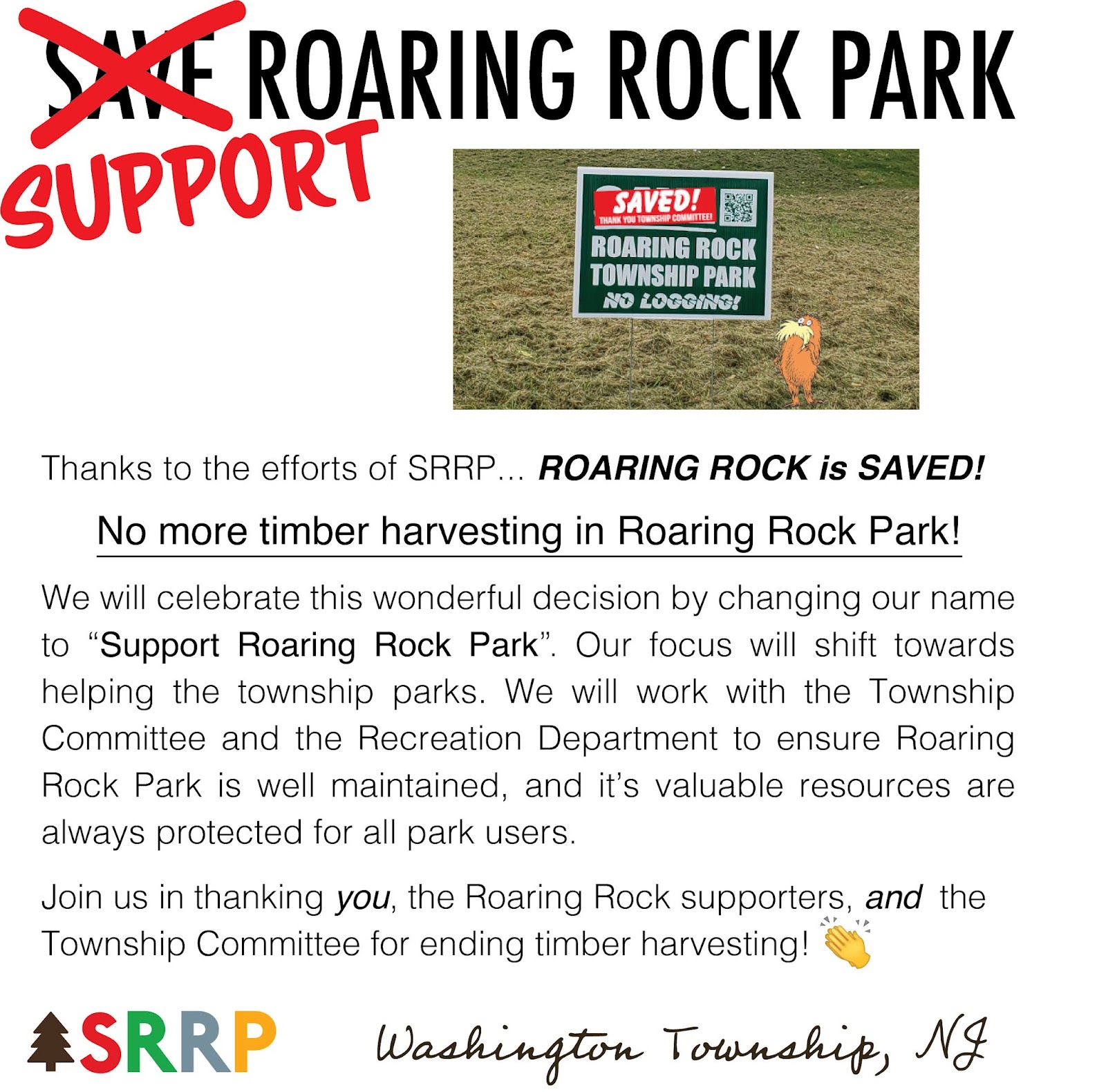
We changed our name !

Support Roaring Rock Park website name change announcement December 2021

What happened to the websites?

As we decided to change our name, we also decided to change the website names to reflect that decision. An unfortunate side effect of that website name change is that it creates a bunch of broken links, which use our prior website name, to blog posts that have been shared around social media sites and email newsletters.

We did move over the old blog posts to this site. If you find yourself reading this message, rather than a specific blog post, you may scroll down through the list of posts below to find what interests you.

.. and when you are through ..

Click on this link to take you to our new landing page!

Thursday, November 18, 2021

2021 FMP concerns, requests and call to action

Ladies of mystery Save Roaring Rock Park
Concerned Township residents showing their support!
Washington Township, Warren County, NJ

The following is an archive of our "About Us" page, as it existed during 2021 when Washington Township Warren County had an active Forest Management Plan with Gracie and Harrigan, a forestry consultant. At that time, the Township was embarking on the first year of a ten year commercial logging plan for Roaring Rock Park. After nine months of public lobbying, Township terminated the FMP by adopting Resolution 21-193.


What are our main concerns?

  1. The Township Committee has developed a forest management plan without visible notice to the public or adjacent landowners.    After this issue was brought to the Committee's attention during open public meetings in March 2021, the Township still proceeded to start commercial logging in June 2021 ("Phase One") without prior notice to public.   Even after a request made in an open public meeting, they have rejected the public's reasonable request to implement stakeholder management and proactive communications.
  2. The June 2021 logging activity at the park occurred during the summertime, during peak vegetative growth and wildlife reproductive seasons.    Forest Management activities are typically performed during winter months.    The Township and its logging contractors clearly disregarded what is usual and normally performed, despite the Plan referring to "Best Practices" will be utilized in the park, 
  3. The June 2021 logging activity cut ten foot wide access roads where pristine forest floor once lay.   Moreover, these access roads come very close to Brass Castle Creek with its natural reproducing trout populations.   The access roads lay well within the 300 foot activity free buffer typically specified by New Jersey Department of Environmental Protection (NJDEP),
  4. Access roads created by contractors
    close to Brass Castle Creek

    Roaring Rock Park, Washington Township, Warren County NJ
  5. By bulldozing these access roads so close to Brass Castle Creek, the summertime rain season is creating muddy conditions around the logging area.  These conditions pose soil erosion and silt runoff threats to Brass Castle Creek and its native fish populations, 
  6. The repeated removal of trees , which typically weight over 1000 pounds, over access roads by the heavy “skid steer” machinery will damage the established and sprawling root systems of the trees which exist adjacent to the access roads.   By damaging their root systems, these trees that are not subjected to harvesting will likely die a slow death ("die off") compounding the total tree loss in the forest,
  7. Shallow root system of trees in Roaring Rock Park
    Shallow root system of trees
    Roaring Rock Park, Washington Township, Warren County NJ
  8. Removal of trees open up the forest canopy to sunlight, and when sunlight increases on the forest floor the invasive plant species that now exist at Roaring Rock Park will flourish and increase their foothold.    As the FMP and its amendment do not provide for control of invasive plants, the remaining native plants will be further overrun by invasive species,
  9. It is clear that the logging contractor is removing mature, healthy tree trunks and logs from the site.    During Phase One logging in June 2021, the loggers left an amazing amount of tree crowns (tree tops) which have been cut off the trees prior to their removal.   These crowns have been left piled deeply in the woods, trampling the forest floor habitat.  These piled branches and leaves will add to the forest floor fuel load as they dry, compounding the risk of wildfire.    You often hear one of the benefits of FMP is to reduce forest fire hazard.   This particular activity is increasing the fire load and threat.  
  10. The current FMP, and its amendment in June 2021, do NOT specify remediation of the site after logging activities cease.  Therefore, there is no proactive plan to remediate the soil erosion and run off conditions created by the summertime rain storms on the access roads.   These muddy access roads will continue to pose these threats until the forest "naturally recovers" as indicated in the Plan and its amendment.    The threats to Brass Castle Creek will only be remediated by Mother Nature and on her timetable, and it is uncertain when she will get around to it,
  11. Deer population in New Jersey poses a threat to vegetation.    Deer are particularly fond of tree saplings and small plants for a food source.   As stated in point #8, the Township and its logging contractors are making a conscious decision to let the forest "naturally recover."   What this means: if the trees are to regenerate without planting, seeds must sprout and saplings must develop, and browsing deer will naturally attack them for a food source.   Therefore, the FMP plan for forest regeneration will be compromised by browsing deer.   Note the FMP does not address deer population control. 

What are our requests of Washington Township Committee?

Area residents speak out on July 20 2021
Area residents speak out
Open Public Meeting on July 20th 2021
  1. IMMEDIATELY CEASE, and DO NOT ENGAGE IN FUTURE, summertime logging activities (in other words: follow FMP best practices!),
  2. Create and implement a proactive stakeholder management plan which now does not exist.    The Township does not inform the public of activities it takes in a public park whose maintenance is funded by public tax dollars,
  3. Through stakeholder management, inform the public of future logging activities, BEFORE THEY START,
  4. Meet with the New Jersey Highlands Coalition and their subject matter experts in forest ecology to collaborate on a forest management plan that is ecologically focused and provides for sustainable forest regeneration, with minimal threats to the wildlife that live inside the park.

What can you do ?

Team SRRP at NNO Aug 2021
Team SRRP present in the local community
National Night Out, Washington Township, August 3rd, 2021
  1. Visit and use Roaring Rock Park.    If you do not know where it is, click HERE to pull up a Google Map of its location.   Use the hiking trails that were built from years of volunteer labor.   If you are a fisherman, enjoy fishing Brass Castle Creek.
  2. Consider visiting the June 2021 logging sites at the intersection of Brass Castle and Brass Castle/Harmony Roads, and on the eastern side of Brass Castle Road between Brass Castle/Harmony and Hartmans Corner Roads.  Stare at the logging access roads at these locations.  Observe the conditions left by the logging contractors after they finished harvesting fifteen acres during a few weeks in June.   If you do so, be mindful as you walk around the logging sites.
  3. Read the blog posts on this site from Sara Webb, Ph. D., Professor emeritus of Biology, Drew University, and John Trontis, former Assistant Director of NJDEP Division of Parks and Forestry, that convey their concerns about the Roaring Rock Park FMP.
  4. Consider the opinions of those who believe that FMP will help the forest grow stronger after the harvesting of trees.
  5. Then imagine, and visualize in your mind, how the results of a few weeks of logging in June 2021 will scale across Roaring Rock Park over the ten year duration of the Forest Management Plan.
  6. Then ask yourself:  will you and your children, decades from now, be able to enjoy Roaring Rock Park as it currently exists?  Or will your and your children's experience of the park be different as it struggles to "naturally recover?"  Will "different" be "better"?  Will you and they be satisfied, in the end, from the results of ten years of "forest management" being started by the Township and its logging contractors?
  7. If, after you do these activities, you find yourself as concerned and fired up as we are now, engage Washington Township Committee during their regular open public meetings which occur the third Tuesday of each month, starting at 7:30 PM.   Tell them during the open public comment part of the meeting agenda the concerns now in your mind.    If you can not attend in person, or if public speaking makes you anxious, write them a letter with your concerns and ask them to enter it into the public record.
  8. Washington Township, Warren County NJ Municipal Building
    Washington Township, Warren County, Municipal Building
    211 Route 31 North, Washington NJ, 07882

Wednesday, November 17, 2021

Township Committee TERMINATES RRP Forest Management Plan

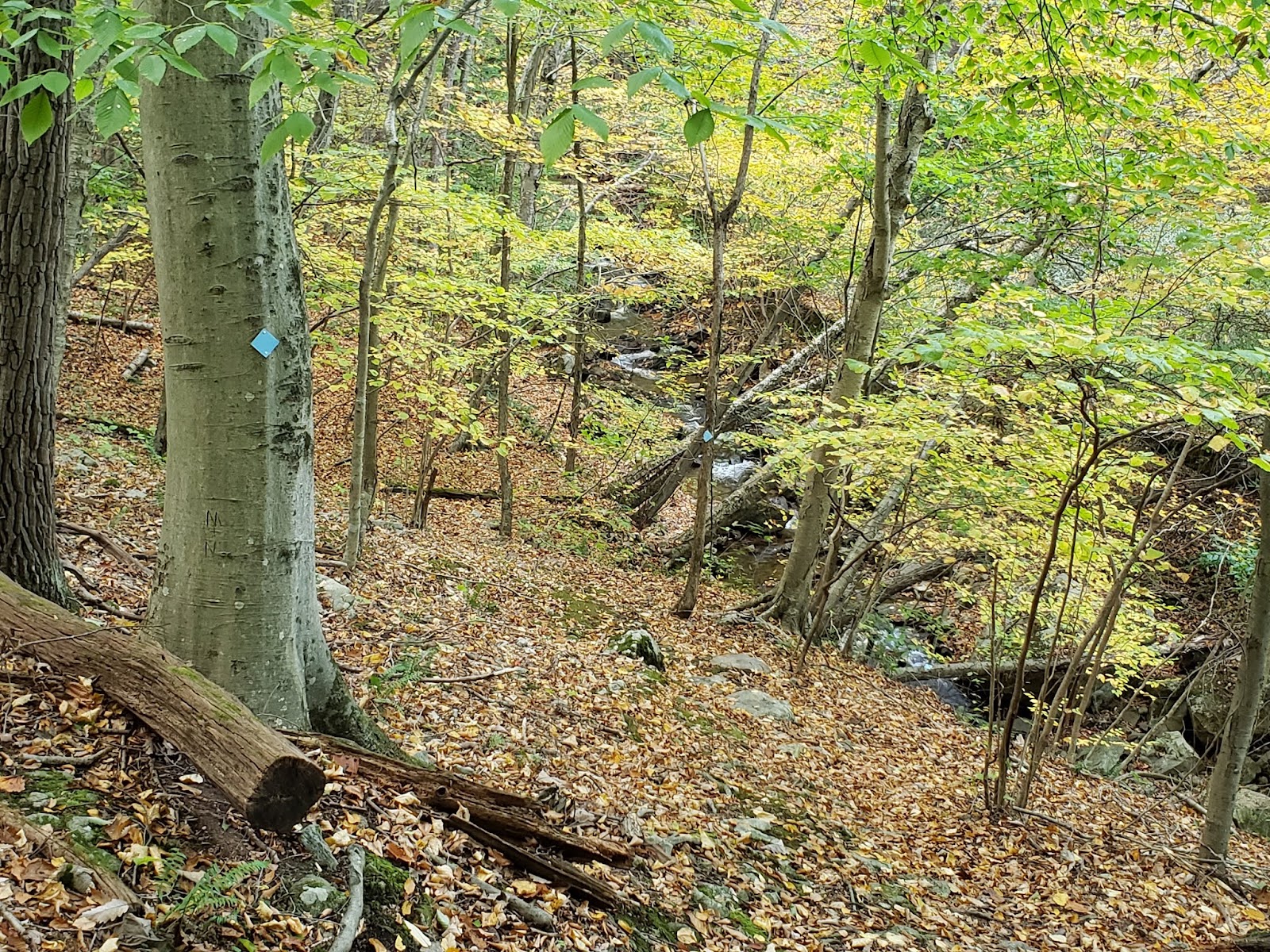
Roaring Rock Park Autumn 2021
Roaring Rock Park - Autumn 2021
Washington Township, Warren County, NJ
GOOD NEWS !!!

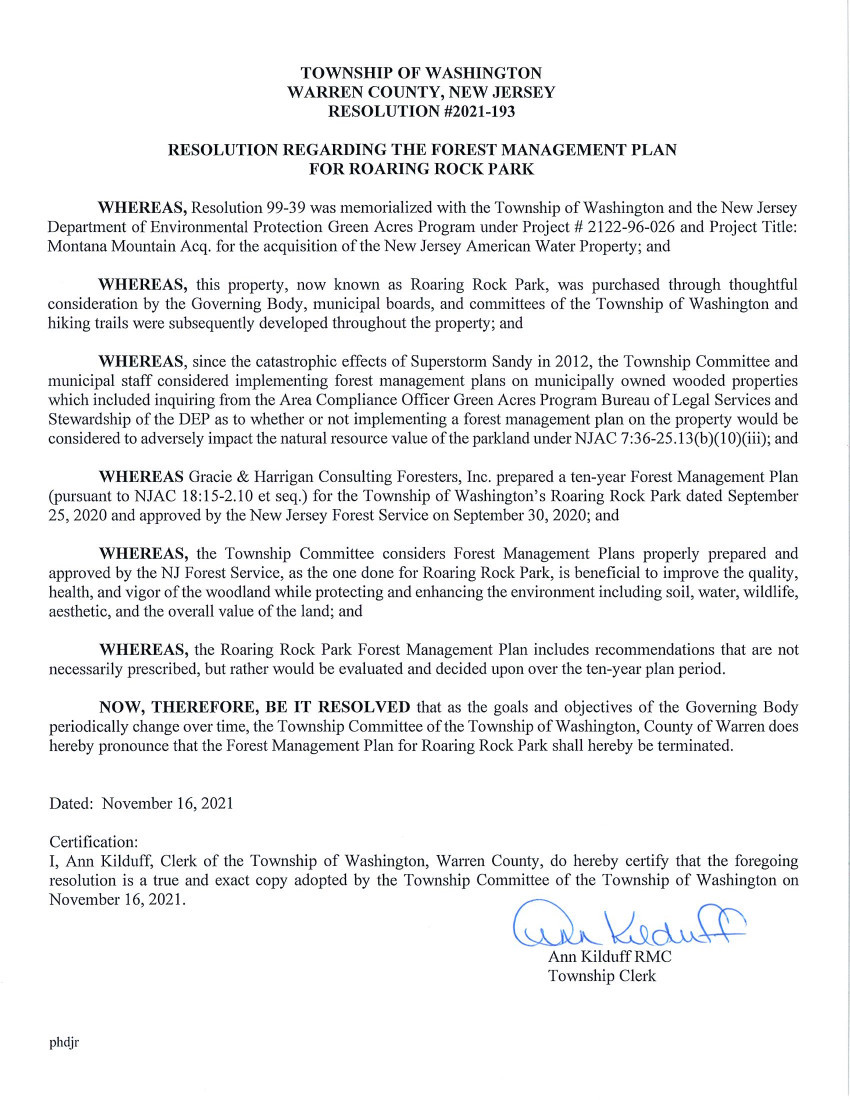
During the November 16th, 2021 open public meeting, Washington Township Warren County NJ Committee unanimously voted to adopt Resolution 21-193 ...

Washington Township Warren County NJ Resolution 21-193 that terminates Roaring Rock Park FMP

... terminating the Forest Management Plan designed for Roaring Rock Park.  As an outcome, we do not anticipate further logging of the park as outlined under this ten year plan.

Team SRRP thanks the Committee for their decision, and those of you who donated their time and resources to get to this point!

What lies next ?
Blue Trail descent Roaring Rock Park Autumn 2021
Descending the Blue Trail towards Brass Castle Creek
Washington Township, Warren County, NJ

Our team intends to evolve towards being more proactive, constructively engaging the Township to preserve and improve the park and other passive recreational sites like it.   We hope you will join us as we move forward.  Check back here frequently, follow us on social media using the links at the bottom of this page and look for future email newsletters to learn more.

Again -- THANK YOU for your support!

Saturday, October 16, 2021

An educator critically reads the forest management plan

Sarah Hare Hope NJ

Sarah Hare, a reading specialist and Hope New Jersey resident, provided these public meeting comments during the March 16th, 2021 Township Committee meeting, reflecting on her impressions when she gave a critical reading of the Township's forest management plan.

Sarah Hare March 16 2021 Township Meeting comments

Featured Posts

Recent Posts

Our fellow advocacy groups

Follow us on social media!