Team SRRP member Laura Oltman prepared the following written statement, in
reponse to the New Jersey Task Force's final report that was submitted to a
joint session of New Jersey's Legislature on February 22, 2023. Laura was an
active participant of the yearlong Task Force proceedings in 2022.
SRRP took the position to not sign onto the Task Force recommendations. The
following statement outlines our rationale why.
Dear Senator Smith and Members of the Senate and Assembly Environment
Committees,
I participated in the NJ Forest Task Force convened by Senator Bob Smith.
I represented a grassroots group that was formed to oppose commercial
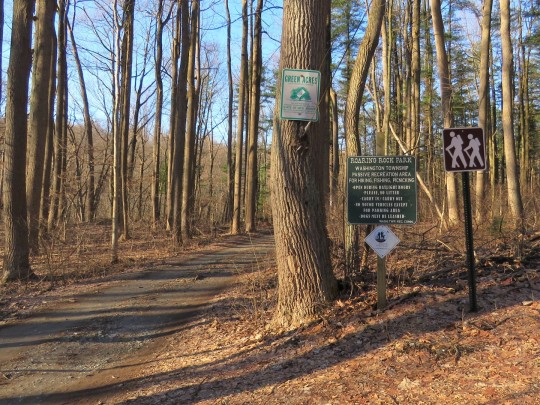
logging in a 395-acre wooded park in Washington Twp., Warren County. The
park is Roaring Rock Park and the group was originally named Save Roaring Rock
Park. I am extremely pleased to report that public pressure brought the
logging operations to a close after the first season of logging. Now our
group is re-named Support Roaring Rock Park, otherwise known as SRRP.
In that capacity as supporters of Roaring Rock Park, our group is opposed to
the task force recommendations as presented at the joint legislative committee
hearing on Feb. 22, 2023. Our experience halting logging in Roaring Rock
Park has taught us exactly how easy it is to initiate a commercial logging
plan on publicly owned land.
To describe briefly the history of events, after Hurricane Sandy blew down a
number of trees in Roaring Rock Park, Washington Township officials
investigated removing damaged or blown down trees from the park. They
contacted Green Acres, who funded the purchase of the park, and found that
they would need to hire a state-certified forester to create a forestry plan
that needed approval from the NJ Division of Parks and Forestry. The
idea languished until a few years ago when it was revived with the idea that
the township could realize added income from selling tees in the park.
They hired the forestry firm of Gracie and Harrigan to create a Forest
Management Plan that was approved for the park by the NJ Division of Parks and
Forestry. After this approval was gained, it became known that this plan
existed and public opposition grew. The township committee decided to
hold a public hearing to explain the plan. This was after the fact of
approval and signing of contracts for logging operations. As an aside,
Gracie and Harrigan not only created the plan but was hired to oversee its
implementation. They were to receive a percentage of the returns on the
sale of logs. They also were charged with hiring a logging company,
Heacock Lumber in Ottsville, PA, which was found to be a violation of laws
requiring a public bidding process for the logging.
The first phase of logging began in the spring during nesting season for birds
and many other animals. In addition to this, the ground was very soft
and heavy logging equipment severely damaged soil and tree roots, eventually
killing a number of standing trees. Felled trees, and there were many,
were filled with nests at this time of year and no one will ever know how many
nests were destroyed. Logging was carried out almost in the water of a
tributary to the C1 designated Brass Castle Creek. Slash was allowed to
fall in the water and nothing was done to prevent stormwater runoff or silt
from the mud creating by logging equipment to enter this tributary.
Complaints were registered with the Division of Parks and Forestry and a
few meager efforts were undertaken after the fact to mitigate some of the
damage, but they were by far not the “standard of care” for the damages done.
After the logging operations were completed for the season there were
several large rain events that took place, including Hurricane Ida, that
washed untold amounts of silt and slash into the water and the Brass Castle
Creek. The forestry plan had stated that logging “should” be done in
winter when the ground is frozen or late in the summer when it is more likely
to be dry. Instead logging commenced in spring and was followed by
several huge rain events. The forestry plan called for certain best
practices, such as a 65’ buffer along the banks of C1 water and avoiding
allowing slash to enter the water, that were not employed. The plan also
advised site remediation after logging, a suggestion rejected by the township
government. So, the minimal safeguards described in the forestry plan
were meaningless in practice.
The NJ Highlands Coalition appealed to John Cecil, Assistant DEP Commissioner
and head of the Division of Parks and Forestry, pointing out that there are
many important public trust resources in this park that were and would
continue to be damaged or destroyed by logging. C1 waterways were at the
top of the list, as was wildlife habitat, a rare heritage strain of native and
naturally reproducing trout in the fishery of the Brass Castle Creek, flood
mitigation provided by the wooded landscape on steep slopes, clean water for
drinking and very important was a source of recreation for the communities in
Warren County and the State of NJ.
Mr. Cecil replied that there was nothing amiss about the process that resulted
in logging this park and there was no legal bar to it. Therefore, there
was no justification for him to revoke the approval of the logging plan.
It is extremely important for the Legislature to understand that there is no
regulation of logging on public land separate from the process created for
private landowners to get a tax abatement for an agricultural use of land.
Therefore, there is no public hearing process before plan approvals are
granted or process for the public to challenge approvals. This applies
to land owned by the public and typically bought to protect it from some
kind of unwanted development. In fact, because logging is legally an
agricultural activity, logging operations are exempt from regulations that
otherwise protect land being developed and disturbed.
Another key misunderstanding is the purpose of forestry. Forestry is an
agricultural activity which seeks to produce wood products. Goals
include creating the maximum number of the desired or most valuable trees of a
size that will produce adequate profit when harvested. Also, forestry
seeks to continue to harvest trees from an area of land into the foreseeable
future. Forestry plans typically last 10 years but can be renewed for
decades. In northeast NJ forests, like those in the Highlands, the
typical target species for loggers are oaks and tulip poplars. Forestry
plans seek to created ideal growing conditions for as many oaks and poplars as
possible. Other trees might be harvested for firewood or bio fuels but
are not cultivated, as are oaks and poplars. Any benefits to wildlife
from logging would be limited to those species of fauna and flora that can
rely mainly on food and shelter provided by oak and poplar trees. That
would exclude the Federally-listed Endangered Indiana Bat, known to live in
the bark of shagbark hickory trees, a tree species of little value to
foresters that would likely be eliminated from managed forests for use as
firewood. Wildlife would also need to be able to adapt to periodic,
indiscriminate removal of large swaths of trees and the damage that occurs in
that process.
SRRP cannot support the task force recommendations because they perpetuate
logging for profit on public lands in a number of ways. The task force
leaders did not allow any discussion of the exemptions from land use
regulation granted to forestry activities. We and others maintain that
the current way the DEP is approving these plans is illegal because it is
using a permitting framework that is specifically intended for private
property and for tax purposes of private property owners. That process
cannot be applied to publicly owned land, which is not taxed. These
exemptions created significant damages in Roaring Rock Park and also Sparta
Mt.
Recommendation 15 of the task force report implies in one sentence that there
should be no commercial logging on public lands:
The NJDEP should not include commercial profit as a goal in any forest
management plan* on public land. Commercial timber management should not be a
goal for any forest management plan on public land.
But in the next sentence says that logging should be allowed on public land
for certain undefined purposes:
Wood products can be sold in instances where cutting and removal of wood is a
necessary part of an approved plan with ecological health, climate, or other
non-commercial goals.
*includes Ecological Restoration Plans, Natural Resource Stewardship Plans or
other plans on public forested lands
This statement cements the status quo that the public is witnessing with
horror. The plan to log Roaring Rock Park was approved under the premise
that it was intended to improve the health of the forest by thinning the
trees. This same plan, with all its exemptions and profit motives, would
still be approvable under Recommendation 15. This is completely
unacceptable.
The task force recommendations do not have any guiding principles or goals.
This is a fatal flaw. Lots of inventory and planning is proposed,
but with no particular purpose expressed. We believe the unstated
purpose of creating a forest inventory is to find areas to log with less
likelihood of successful public opposition. A forest inventory could be
an incredibly valuable step if the goal was to determine how we might best
increase carbon sequestration in our existing public forests and how we might
create more contiguous canopy to benefit the interior forest species that have
few areas of habitat left in NJ due to canopy clearing and forest
fragmentation. For an inventory to have meaning, goals for the use of
our forested public lands would need to be agreed upon and this was not
possible in the task force process.
SRRP advocates for making the goal of forest management twofold. One
goal should be to increase carbon sequestration in our public forests by
allowing trees to remain in the forest, either standing or decomposing.
It has been repeatedly demonstrated by scientific research that mature
deciduous trees with lots of leaves sequester far more carbon in each tree
than even a large number of smaller trees that do not have large leaf area.
We should prioritize allowing native trees in our mature forests to
continue growing, as well as preventing these mature forests from being
converted to other uses. The Princeton University Net Zero America study
demonstrates that stopping deforestation is the best way to increase the
carbon sequestration of forests in NJ as well as nationwide. Protecting
forests to increase carbon sequestration would align with state and national
goals to reduce carbon emissions.
The second goal, which is a happy consequence of protecting trees in our
forests is that it also would protect the innumerable ecoservices they
provide, like filtration of stormwater runoff that cleans water and mitigates
flooding, all kinds of habitat for wildlife that rely on intact forests, and
one of the most overlooked benefits for our forests, peace and quiet and
beauty for people who visit to hike, picnic or just drive by. It is not
expensive to simply let forests grow. It is technically entirely
feasible, unlike carbon capture or some other high-tech climate solutions.
It is also a readily available solution, as NJ already has forested
public land. Task force leaders have said that there is somehow a
dichotomy between advocating for carbon sequestration in forests and fostering
biodiversity, recreation and other forest benefits. In fact, the
opposite is true. Protecting forests from logging will readily provide
all these benefits, in addition to increasing carbon sequestration.
Another big problem for NJ forest health is deer browse. Cutting
down areas of forest only increases available habitat for deer, who thrive at
the edges of forested areas. Allowing trees to remain standing will
reduce habitat for deer in public forests and deer were identified in the task
force report as a threat to NJ forests.
One key recommendation that we agree with is the need for state policies
codified by statute for management of NJ public forests, adopted pursuant to
the administrative procedures act. At the very least, this would ensure
that the public has some say in the process of approving management plans for
NJ forests.
The idea of letting forests grow is not novel. Since the
late-19th century New York state has protected vast acres of forested
land under its “forever wild” designation. Far from being “unhealthy”,
as foresters claim unharvested forests to be, the effort to protect over 6
million acres of forest in a natural state has been extremely successful.
It can be and has been done.
The public will have the last word on what happens to our publicly owned
forests and I am confident beyond the shadow of a doubt that the public is
opposed to logging and removal of wood products from NJ publicly owned
forests. People do not believe that logging is even allowed in parks
purchased with Green Acres funding. Sadly, it is allowed. But it should
not be and now is an ideal opportunity to take the necessary steps to protect
one of our best hedges against climate change as well as a beloved public
asset-- our forests.
Sincerely,
Laura Oltman
Support Roaring Rock Park